Is Tampa Heights Walkable Living Right for You?
If you’re hoping to spend less time in traffic and more time enjoying Tampa, Tampa Heights and Downtown deserve a close look. This part of the city gives you real access to parks, dining, waterfront paths, transit, and everyday destinations without needing to drive for every errand. While most residents will still find life here more car-light than fully car-free, you can build a lifestyle around walking, biking, transit, and short shared rides. Let’s dive in.
Tampa Heights sits just north of Downtown Tampa and has become one of the city’s most connected urban neighborhoods. According to the City of Tampa’s neighborhood overview, the area is closely tied to the riverfront and Downtown, which helps explain why it stands out for lower-car living.
A big part of that appeal comes from the Heights District. Armature Works describes it as a 50-acre mixed-use urban district anchored by the Hillsborough River and Downtown, giving you a central hub for dining, gathering, and riverfront access.
The neighborhood also benefits from Water Works Park, a public riverfront park with a playground, splash pad, shaded picnic areas, dog park, amphitheater, boat dock and water taxi access, plus direct Riverwalk access. That kind of public space makes it easier to enjoy the area on foot instead of getting in the car every time you want to get outside.
One of the biggest advantages of living in Tampa Heights or Downtown is how many destinations connect through the waterfront. The Tampa Riverwalk is described by the city as roughly 2.4 to 2.6 miles of uninterrupted or continuous multi-use waterfront path through downtown.
That route is more than scenic. The city notes that the Riverwalk passes six parks and links restaurants, museums, public art, and major destinations including Armature Works, the Straz Center, the Tampa Museum of Art, Sparkman Wharf, the Tampa Theatre, the Tampa Convention Center, and the Tampa Bay History Center.
For someone trying to live with fewer car trips, that matters. It means entertainment, recreation, and a lot of your social life can happen within a connected urban corridor rather than across disconnected pockets of the city.
From Tampa Heights, city redevelopment materials highlight short-distance access to destinations like Water Works Park, Ulele, Curtis Hixon Waterfront Park, the Straz Center, the Tampa Museum of Art, and the Glazer Children’s Museum. In practical terms, that gives you a walkable or bikeable lineup of places to meet friends, enjoy the riverfront, or spend a weekend afternoon.
Downtown also benefits from a broader mobility network. The Tampa Downtown Partnership emphasizes trails and paths such as the Riverwalk, Selmon Greenway, Soulwalk Downtown, and Meridian Greenway, reinforcing the idea that getting around here is not limited to driving.
Even if you like to walk, most car-light lifestyles work best when you have backup transportation. Tampa Heights and Downtown offer several ways to fill that gap.
The TECO Line Streetcar is a 2.7-mile fixed-guideway system connecting Downtown Tampa, Channelside, and Ybor City. The city says it runs every 15 minutes, offers free fares, and has expanded hours, which makes it a useful option for short trips and evening outings.
There is also future potential for even better connectivity. The city’s InVision project is studying a 1.3-mile extension through downtown to Tampa Heights, which signals continued public investment in urban mobility.
If you need broader transit access, HART’s Downtown Tampa map shows Marion Transit Center as a major hub with numerous routes, including 1, 5, 6, 7, 8, 9, 10, 12, 19, 30, 275LX, 360LX, and 400. HART also notes that all buses are wheelchair accessible and equipped with bicycle racks.
For shorter trips inside the urban core, DASH offers an app-based hub-to-hub service in downtown Tampa. It costs $2 per person, uses 100% electric vehicles, and runs Monday through Saturday from 7 a.m. to 11 p.m. and Sunday from noon to 9 p.m.
For many residents, that combination can cover a lot of needs. You can walk when it’s easy, use transit for longer hops, and lean on DASH when you want a simple short ride without moving your car.
If you’re open to biking, Tampa’s infrastructure adds another layer to car-light living. The city reports 21 miles of separated and low-stress bike lanes, 92 miles of multi-use paths and trails, and 8 miles of neighborhood greenways.
One especially relevant project is the East-West Green Spine cycle track. The city says it is designed to connect Tampa Heights, North Hyde Park, Downtown, and Ybor City to the Hillsborough River, giving this area stronger bike connections over time.
Shared micromobility can also help with short trips. The city’s shared micromobility program includes Lime and Spin services, which can be useful when you need to cover a quick distance without driving.
There is one important rule to know. Shared bikes and scooters are not allowed on the Tampa Riverwalk, Bayshore Boulevard, or 7th Avenue, so it helps to understand where those options work and where they do not.
For most people, the honest answer is no. The better description is car-light urban living.
City parking materials show that Downtown Tampa still has event-driven traffic patterns and parking infrastructure, and on-street parking still exists in both Tampa Heights and Downtown. During busy weekday hours or major events near places like Curtis Hixon Waterfront Park and Amalie Arena, driving conditions and parking demand can still shape your experience.
That said, you may not need your car nearly as often as you would in many other Tampa neighborhoods. If your routine includes a mix of walking, biking, the Riverwalk, transit, DASH, and occasional ride-hailing, this part of the city offers one of the most practical lower-car lifestyles in the area.
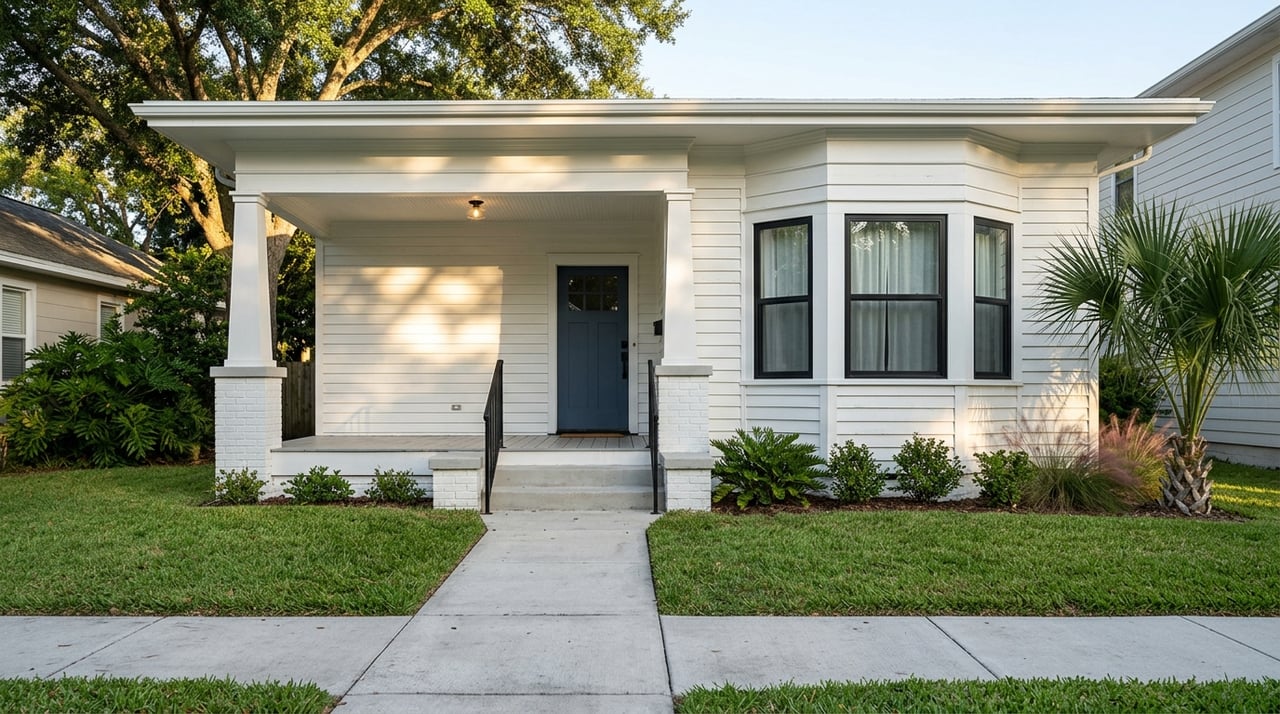
Housing choice matters when you’re trying to reduce car dependence. Tampa Heights offers a mix that appeals to buyers who want character, location, and urban access.
The Tampa Heights Historic District documentation describes homes dating from the late 1800s to the mid-1940s, with mostly single-family dwellings including bungalows and wood-frame vernacular homes, along with apartment buildings, churches, and commercial structures. That means you can find an older neighborhood feel close to the urban core.
The city also allows accessory dwelling units in the Tampa Heights Overlay, including garage apartments, tiny homes, and mother-in-law cottages. For some buyers, that adds flexibility for guests, extended household needs, or future use planning.
On the newer side, Tampa Heights Riverfront redevelopment materials reference projects like the restored Armature Works, the Pearl Apartments, Heights Union, a Sprouts grocery store, and additional urban mixed-use development. Nearby Downtown also includes a range of multifamily living options along the waterfront and urban core.
The city’s neighborhood guide describes Tampa as offering everything from bungalows to condominiums, while framing the Urban Core as a center with new residences and convenient access to a major job center. If you want a condo, apartment, or close-in single-family home that supports a more walkable routine, this area gives you several directions to explore.
This lifestyle tends to appeal to buyers who value convenience and experience over a fully car-centered routine. If you like being near restaurants, parks, waterfront paths, and downtown events, Tampa Heights and Downtown can feel much more connected than many suburban setups.
This can be a strong fit if you are:
It may be less ideal if your routine depends on frequent cross-town driving, large-lot living, or destinations that are spread far outside the urban core.
If you’re considering a move here, it helps to think beyond the home itself. Your exact block, building, and daily routine will shape how practical this lifestyle feels.
Here are a few smart things to evaluate:
A lower-car lifestyle is usually about convenience, not perfection. The more your home connects to the places you already use, the easier it is to leave the car parked.
If you’re weighing Tampa Heights against Downtown, or trying to decide whether an urban, car-light setup fits your routine, working with someone who understands the block-by-block differences can help. Skyler Warden brings local Tampa insight, clear guidance, and a practical view of how neighborhood lifestyle connects to your home search.
Stay up to date on the latest real estate trends.
September 17, 2026

September 10, 2026

September 3, 2026

August 27, 2026
August 20, 2026
August 13, 2026
August 6, 2026
August 6, 2026
July 23, 2026
Lorem Ipsum dolor sit amet, consectetur adipiscing elit, sed do eiusmod tempor incididunt ut labore et dolore magna aliqua. Ut enim ad minim veniam, quis nostrud exercitation ullamco laboris nisi ut aliquip ex ea commodo consequat. Duis aute irure dolor in reprehenderit in voluptate velit esse cillum dolore eu fugiat nulla pariatur. Excepteur sint occaecat cupidatat non proident, sunt in culpa qui officia deserunt mollit anim id est laborum.